
Book description
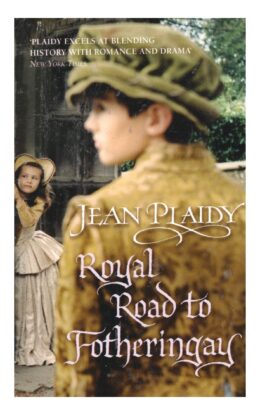
The Royal Road to Fotheringhay
English:
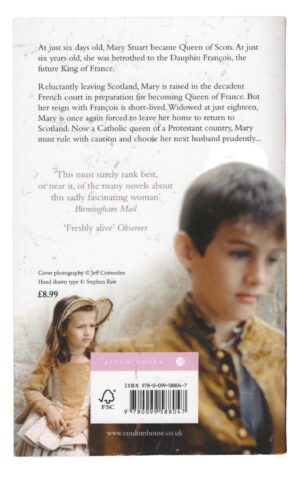
Mary Stuart became Queen of Scotland at the tender age of six days old. Her French-born mother, the Queen Regent, knew immediately that the infant queen would be a vulnerable pawn in the power struggle between Scotland’s clans and nobles. So Mary was sent away from the land of her birth and raised in the sophisticated and glittering court of France. Unusually tall and slim, a writer of music and poetry, Mary was celebrated throughout Europe for her beauty and intellect. Married in her teens to the Dauphin François, she would become not only Queen of Scotland but Queen of France as well. But Mary’s happiness was short-lived. Her husband, always sickly, died after only two years on the throne. And there was no place for Mary in the court of the new king. At the age of twenty, she returned to Scotland, a place she barely knew.
Once home, the Queen of Scots discovered she was a stranger in her own country. She spoke only French and was a devout Catholic in a land of stern Presbyterians. Her nation was controlled by a quarrelsome group of lords, including her illegitimate half brother, the Earl of Moray, and by John Knox, a fire-and-brimstone Calvinist preacher, who denounced the young queen as a Papist and a whore. Mary eventually remarried, hoping to find a loving ally in the Scottish Lord Darnley. But Darnley proved violent and untrustworthy. When he died mysteriously, suspicion fell on Mary. In haste, she married Lord Bothwell, the prime suspect in her husband’s murder, a move that outraged all of Scotland. When her nobles rose against her, the disgraced Queen of Scots fled to England, hoping to be taken in by her cousin Elizabeth I. But Mary’s flight from Scotland led not to safety, but to Fotheringhay Castle…
Polski:
Maria Stuart została królową Szkocji w wieku sześciu dni. Jej urodzona we Francji matka, królowa regentka, od razu wiedziała, że niemowlęca królowa będzie bezbronnym pionkiem w walce o władzę między szkockimi klanami i szlachtą. Maria została więc wysłana z kraju swoich narodzin i wychowana na wyrafinowanym i błyszczącym dworze we Francji. Niezwykle wysoka i szczupła, pisarka muzyki i poezji, Mary była znana w całej Europie ze swojej urody i intelektu. Poślubiona w wieku kilkunastu lat delfinowi François, została nie tylko królową Szkocji, ale także królową Francji. Szczęście Marii trwało jednak krótko. Ponieważ jej mąż, zawsze chorowity, zmarł po zaledwie dwóch latach na tronie. Ponadto dla Marii nie było miejsca na dworze nowego króla. Dlatego też w wieku dwudziestu lat wróciła do Szkocji, miejsca, które ledwo znała.
Po powrocie do domu królowa Szkotów odkryła, że jest obca we własnym kraju. Mówiła tylko po francusku i była pobożną katoliczką w kraju surowych prezbiterian. Ponadto jej naród był kontrolowany przez kłótliwą grupę lordów, w tym jej nieślubnego przyrodniego brata, hrabiego Moray. A także przez Johna Knoxa, kalwińskiego kaznodzieję, który potępiał młodą królową jako papistkę i dziwkę. Maria w końcu ponownie wyszła za mąż, mając nadzieję na znalezienie kochającego sojusznika w szkockim lordzie Darnleyu. Darnley okazał się jednak gwałtowny i niegodny zaufania. Kiedy zmarł w tajemniczych okolicznościach, podejrzenia padły na Marię. W pośpiechu poślubiła lorda Bothwella, głównego podejrzanego o morderstwo jej męża, co oburzyło całą Szkocję. Kiedy jej szlachta powstała przeciwko niej, zhańbiona królowa Szkotów uciekła do Anglii. Miała nadzieję, że przyjmie ją jej kuzynka Elżbieta I. Ale ucieczka Marii ze Szkocji nie doprowadziła do bezpieczeństwa, ale do zamku Fotheringhay…
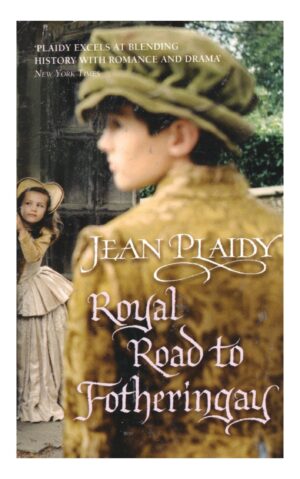
Jean Plaidy – Royal Road to Fotheringay
Jean Plaidy – Royal Road to Fotheringay